Hello ECHO Community,
I’m Juli, the current Urban Garden intern at ECHO North America. This year, I have enjoyed learning about how to garden with limited space and resources, but I have been struggling to find methods to conserve water. My internship began during the rainy season in Florida so I barely touched my hose, but now that we are in the dry season I have found hand-watering to be very time-consuming. I’m looking for advice on how to get all my plants watered efficiently, saving time and conserving water.
Here are several methods of watering I’ve been using in the Urban Garden:
-
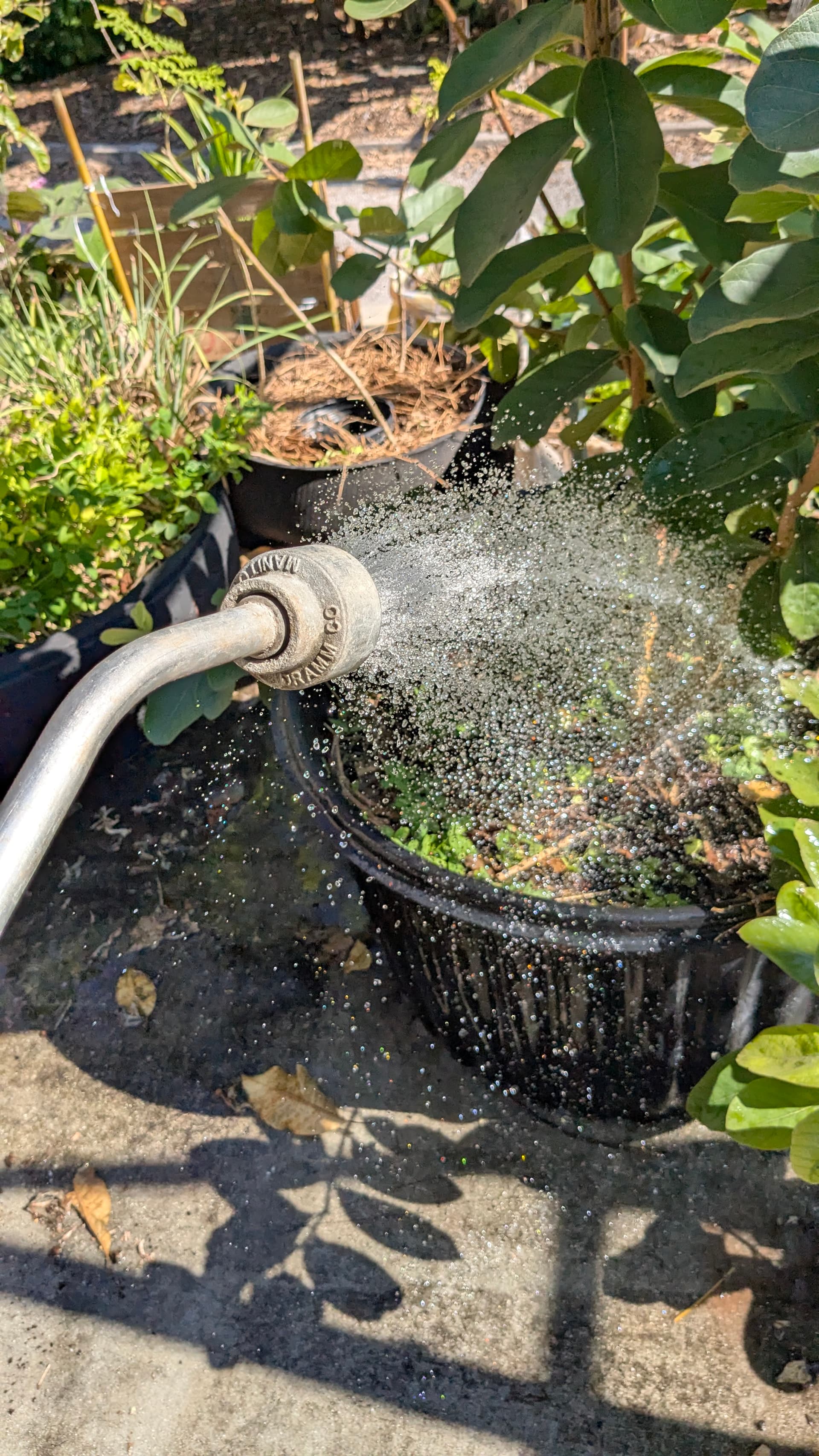
Hose- I use this the most. It’s easy, very mobile, and gives you a lot of control in how much you’re watering, but it can take a lot of time.
-
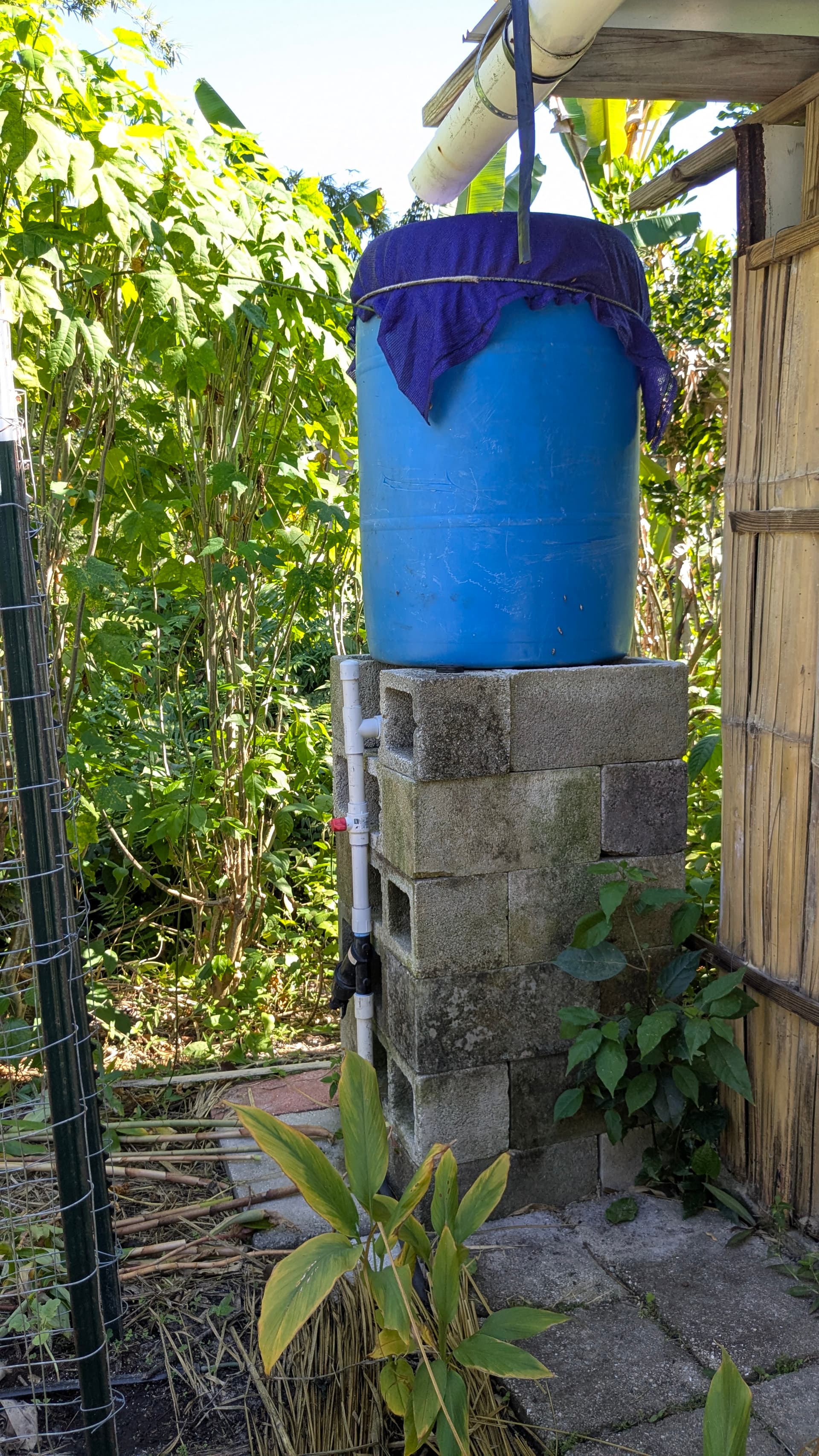
Rain Barrel- It catches runoff from the rooftop and connects to drip tape. I fill it with water from the hose in the dry season.
-
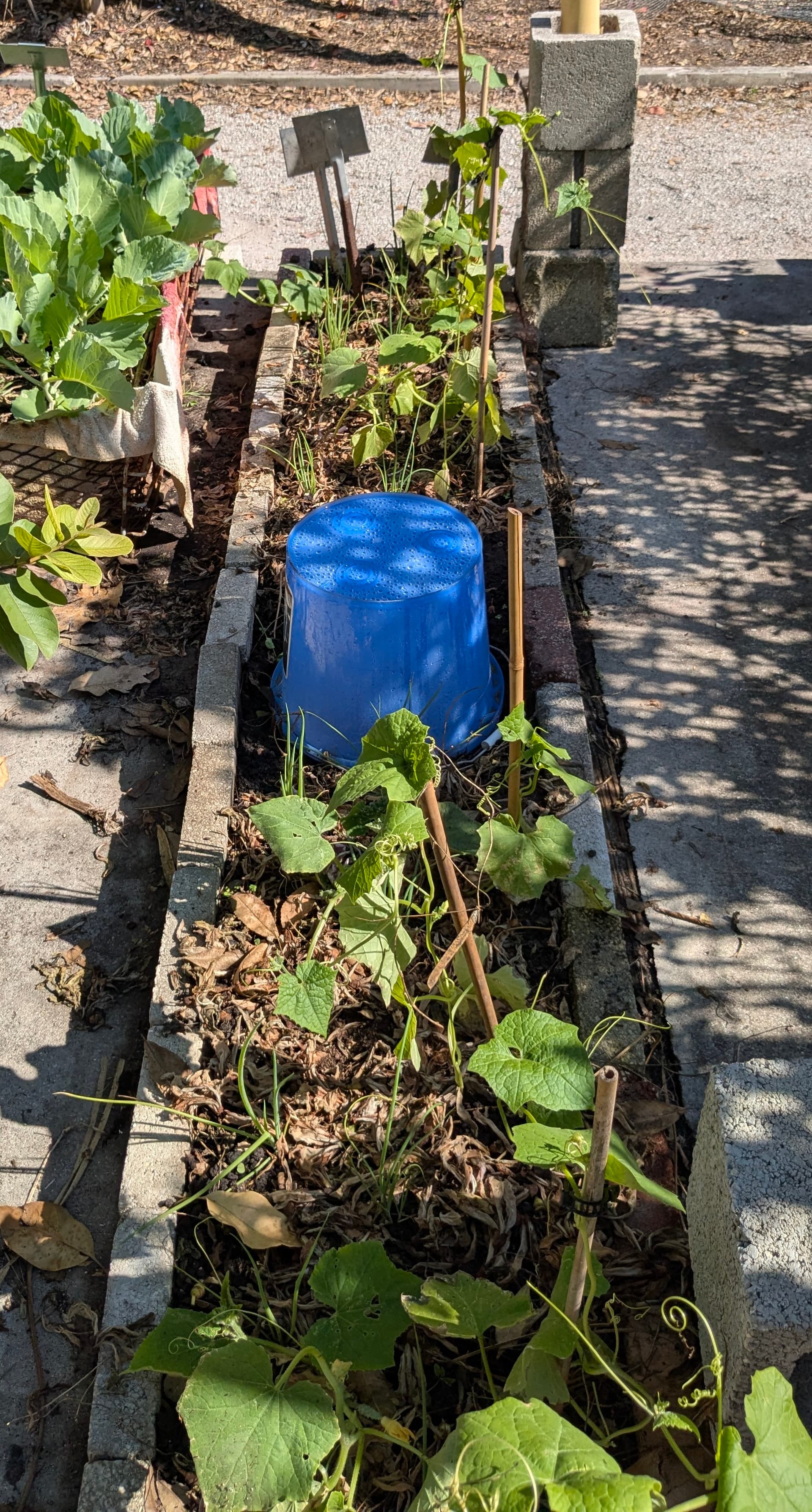
Wicking Bed- It consists of a layer of towels, a few inches of soil on top, and a bucket with a hole in the lid. When the bucket is filled with water and set on top of the towels it slowly leaches out and is wicked up into the soil.
-
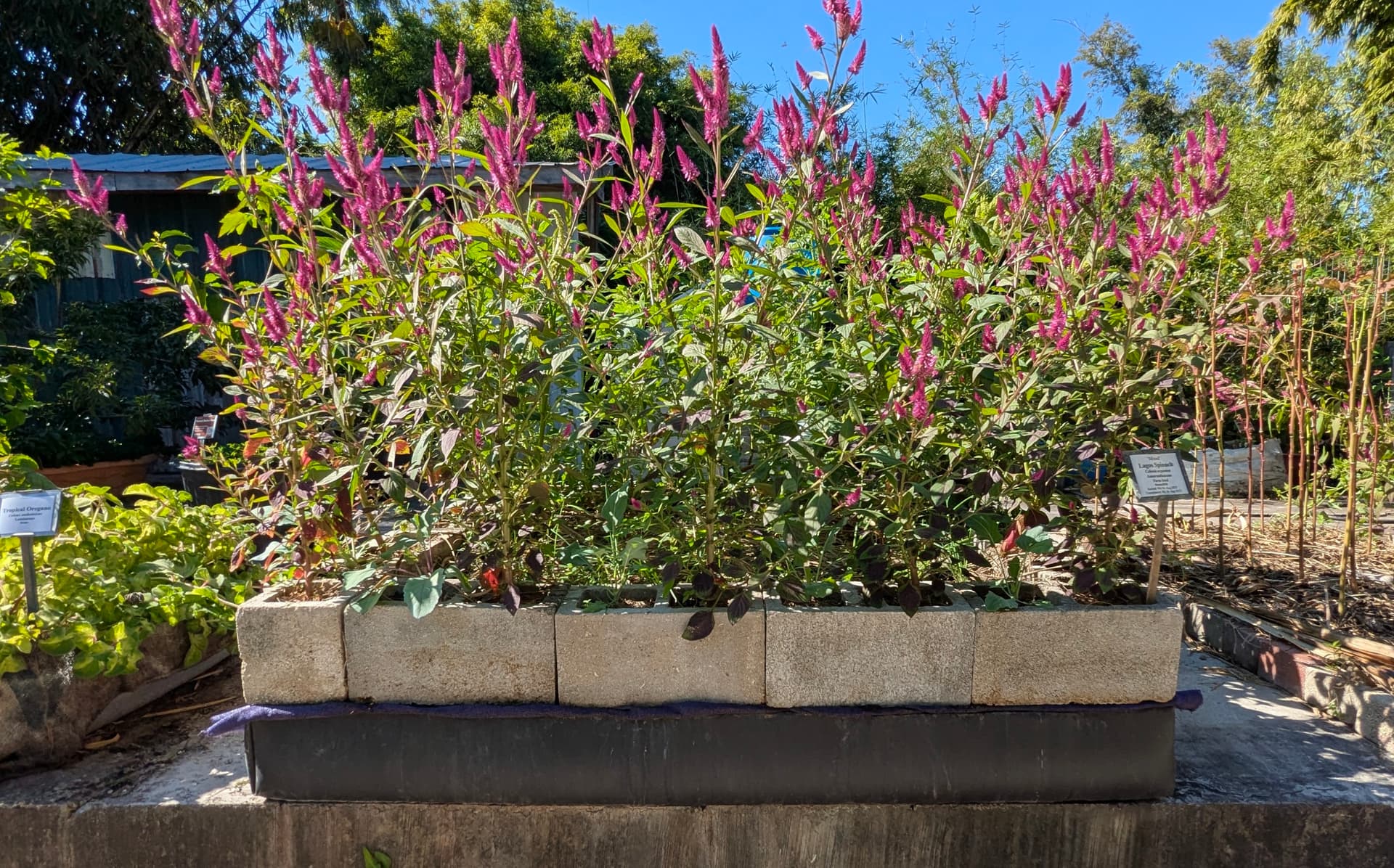
Hundred-Fold Bed- A layer of rubber holds a reservoir of water at the bottom, and a layer of fabric holds soil on top. There’s a PVC pipe that I can stick the hose in, and I only water it about once a week or less.
-
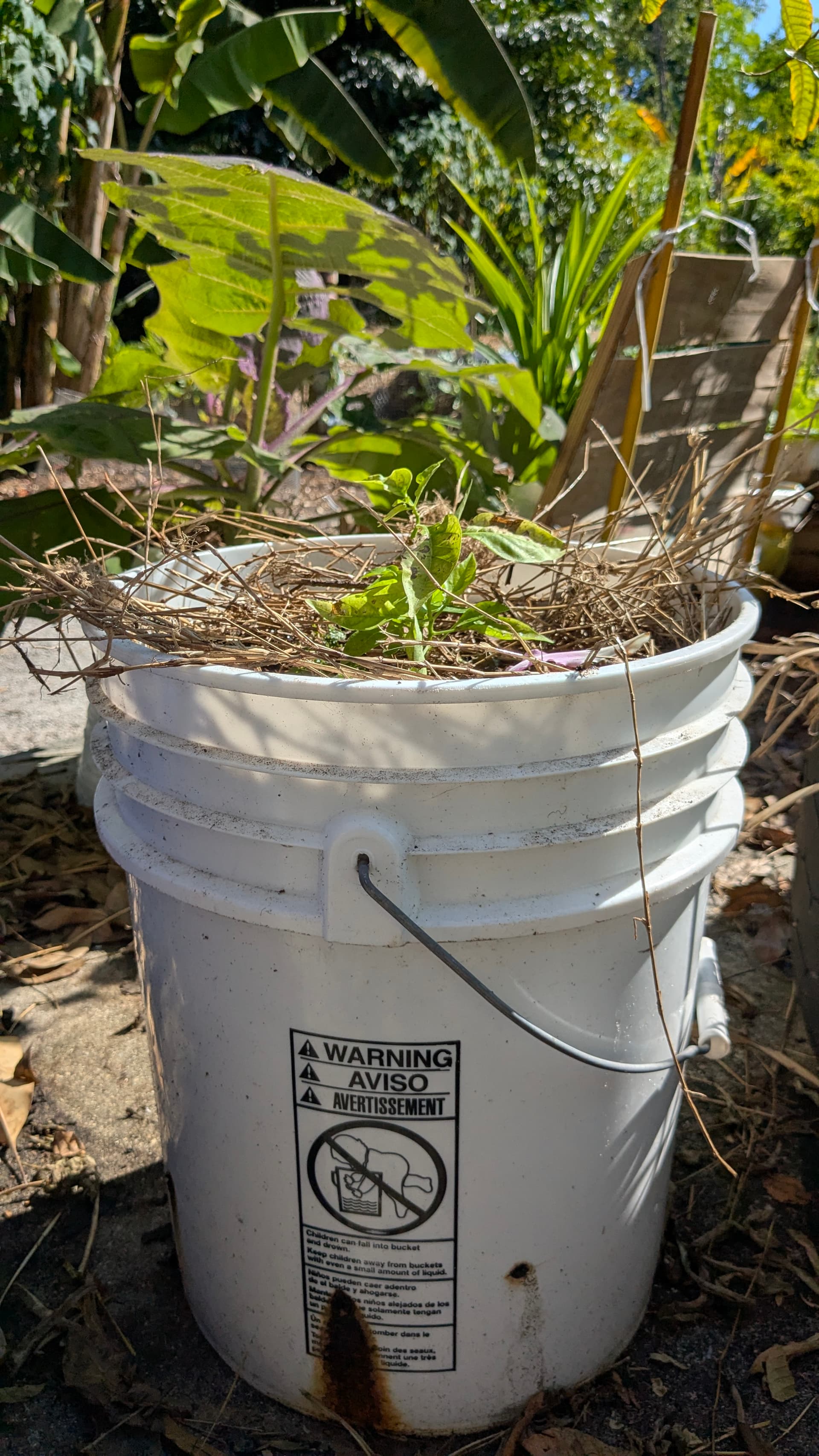
Reservoir Bucket- Similar to the Hundred-Fold Bed but a much smaller version. Rocks, coconuts, or bottles can be put at the bottom to form the reservoir and holes drilled into the side where the reservoir ends to drain excess water.
-
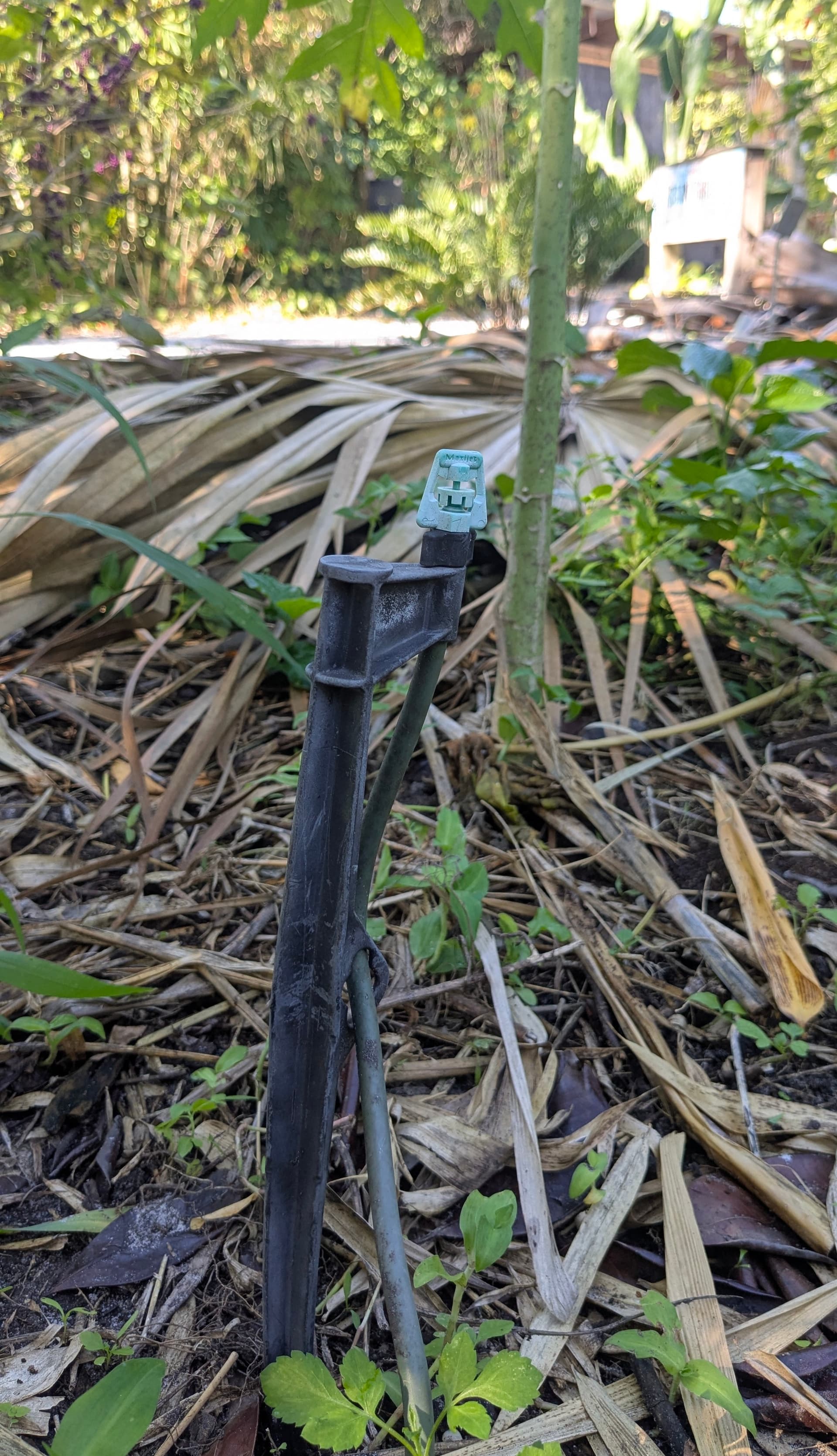
Microjet Irrigation- They’re connected to a pump and shoot out water in a circle of a few feet. These work really well to water perennials.
- What are labor-saving and water-saving methods you have tried?
- What are methods you can use without access to well water?
2 Likes
My experience is that there are three things that make the biggest difference when it’s sunny and hot, day after day: increasing the amount of clay in the soil, doubling up the mulch, building partial shade over the garden bed.
As for watering, there’s just no way around it. If we were growing all natives, then we wouldn’t have to water at all, but since we decided to grow what doesn’t belong then we’re kinda stuck with the labor 
However, clay trench irrigation is used in many hot places, like oases and such, and that’s a lot less labor intensive than walking around with the garden hose.
2 Likes
Oh, I should add: grey water. Every sink and outdoor faucet in my house runs out to its own outside “drain” (spot of dirt). That’s at least 10 banana or papaya trees that get watered without any effort.
2 Likes
Thank you for sharing! I love the grey water idea and planting natives. Mulching and increasing organic matter have probably been the best solutions for me. I am working on getting more shade in my rooftop garden with trees and trellises, the sun is so intense they always look wilty at midday.
3 Likes
Another idea is to grow tasty edible perennial plants with very deep roots that are drought resistant. One example is Mediterranean Saltbush (Atriplex halimus) a perennial bush (a halophyte) with tasty, salty, leaves. It has roots that can grow 10 meters (33 feet) deep to tap into deep aquifers/water tables during a long dry season that our common cool climate vegetables can’t reach due to their shallow roots. As others have commented, adding clay to sandy soils and deep mulches also help as does partial shade during the hottest part of the day. The saltbush can grow 2 to 3 m tall so it can help shade some other crops from hot summer sun but the saltbush roots will compete with the other plants for water and nutrients if they are planted close to the saltbush. Good luck!
3 Likes
Hey Juli,
I totally get this problem, watering by hand gets old really fast once the dry season hits 
From what I’ve tried in small gardens, a few things really helped save both time and water:
Drip irrigation (gravity-based) – honestly, one of the best. If your rain barrel is slightly elevated, you can run drip lines without a pump. It waters slowly right at the roots so almost no waste.
Mulching – sounds basic, but it makes a big difference. Dry leaves, straw, even cardboard… it keeps soil moist longer so you water less often.
Clay pot (olla) watering – bury a clay pot and fill it with water, it slowly seeps into soil. Super low effort and very water-efficient.
Bottle drip system – just poke a small hole in plastic bottles and place them upside down near plants. Cheap and works surprisingly well.
Grouping plants – keep thirsty plants together so you don’t overwater others.
If you don’t have well water, I’d really focus on:
collecting more rain (even small containers help)
reusing greywater (like from washing veggies, just no soap)
Your wicking beds and reservoir systems are already a great setup btw, you’re on the right track just need to reduce how much you hand-water.
Hope this helps a bit!
1 Like
Hi Tom, thank you for sharing. I love the idea of more drought-resistant/dry-season-tolerant perennials in the garden. I was just thinking that sounds like a plant that would grow well in California, and as it turns out, there is a California saltbush that is very similar. It’s cool to hear about another underutilized edible plant!
Thanks Kaden! It’s helpful to hear about what you’ve tested. I would like to set up another rain-fed drip irrigation system because they are so low-waste, but it does take a bit more time, materials, and know-how. Mulching is definitely a quick and easy fix! I have also been using wool in some of my containers, and I like how it has held moisture in and keeps the weeds from growing. The clay pots are a cool idea and it’s good to know the plastic bottles work well too, I will test that one out. Grouping plants is something I’ve discovered the importance of recently, I had to move my rosemary to a new spot away from the hose so I would stop watering it! Also, an issue with collecting rainwater here in Florida is that any standing water will breed mosquitoes within a day, so it’s very important to keep it covered.
Thanks Juliana. Let us know what the California saltbush leaves taste like once you’ve grown some to the harvestable stage.
1 Like