Have you ever used fish or fish waste parts to make fertilizer? It’s surprisingly easy! Today, at ECHO North America RIC I made some with Gabriella from NCAT (https://www.ncat.org/) and we filmed it for a webinar. I’ll post the details for the webinar below when it becomes available.
All you need is these ingredients:
- fish or fish waste parts (1 kg)
- molasses (1 Liter) or a similar sugar source, say brown sugar or cane sugar syrup
- Water (3 Liters)
and these tools:
- a bucket
- knife/machete
-stick for stirring - cloth or sack to cover the bucket
- string to tie the sack on the bucket
- strainer
- container to hold finished product - milk jug, jerry can, molasses container, etc anything with a lid
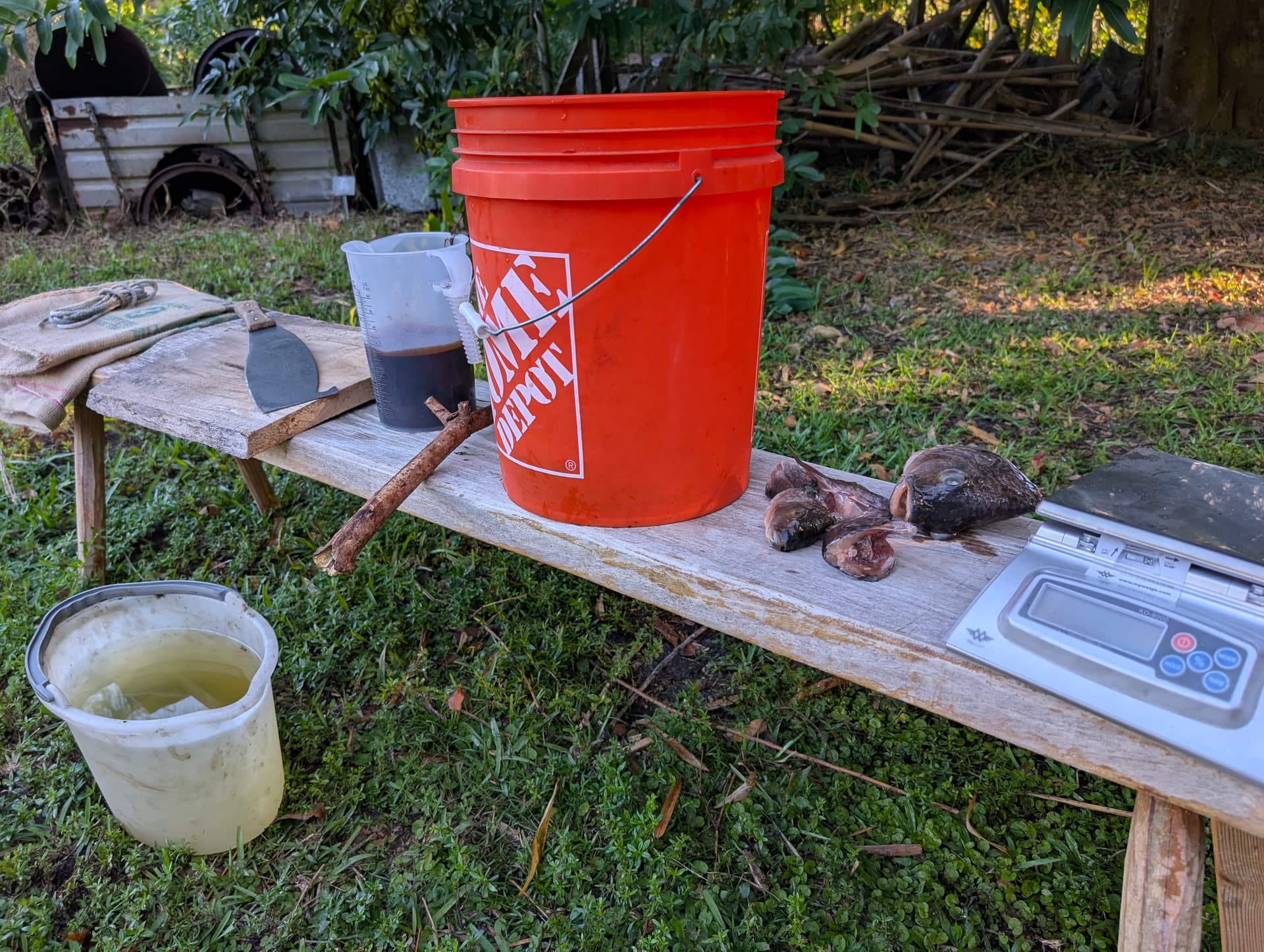
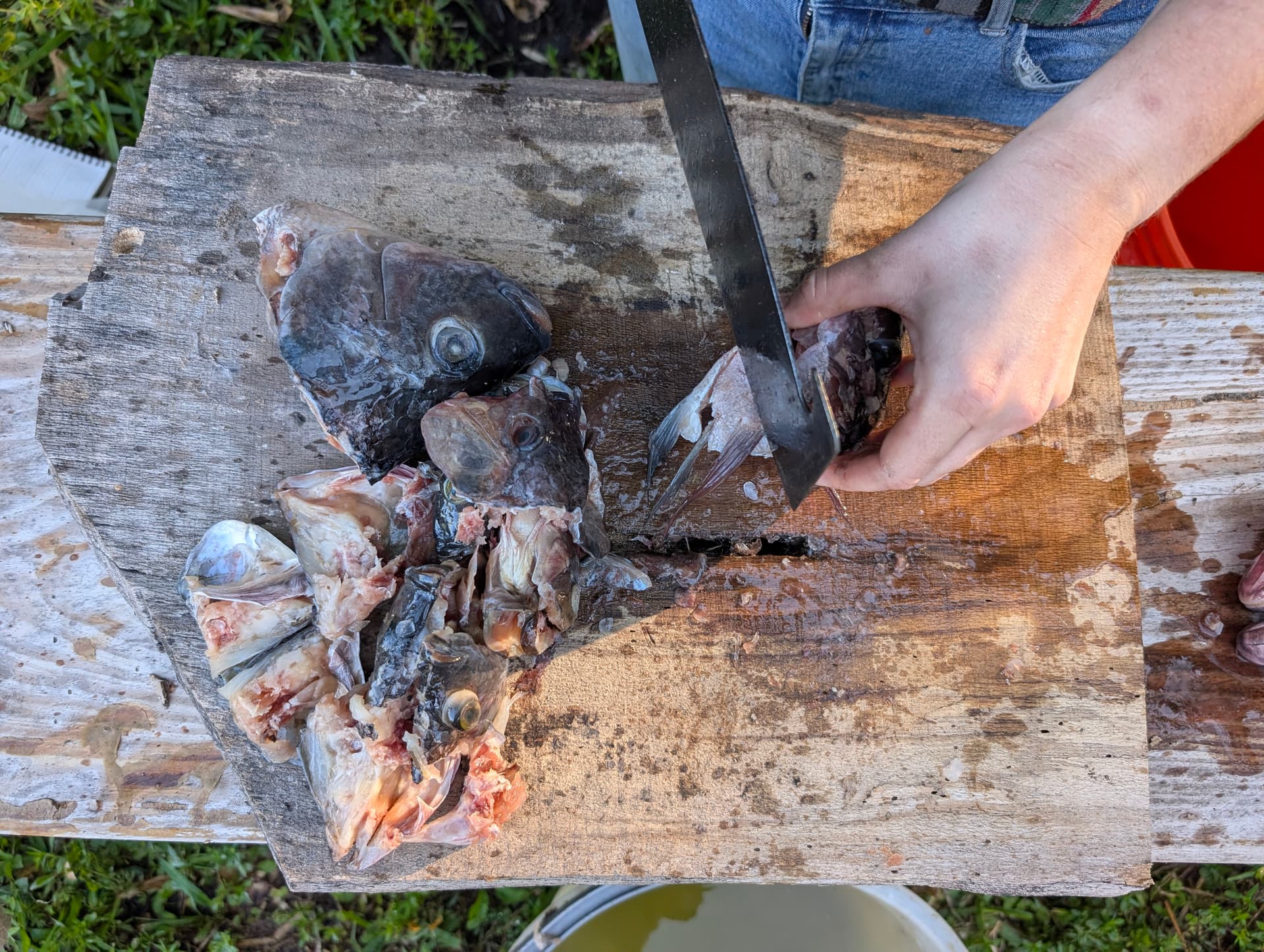
Next, simply chop the fish parts into small pieces (the more surface area the better as it allows more comprehensive microbial breakdown).
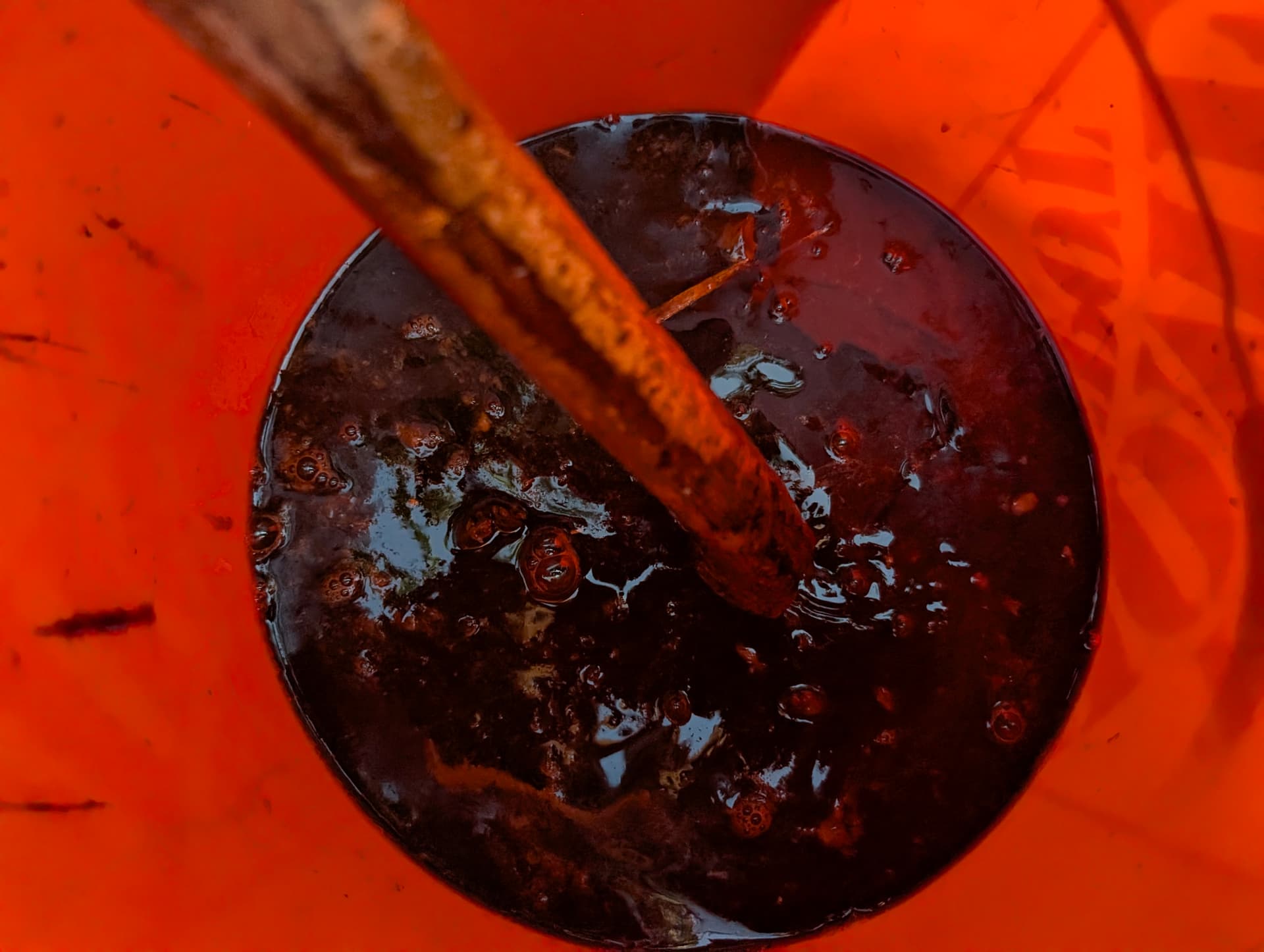
After chopping the fish, add the molasses (1 L) and water (3 L) and stir the mixture very well. Some sources even say to stir as long as an hour. However long you choose to stir, make sure it’s all mixed up as much as possible!
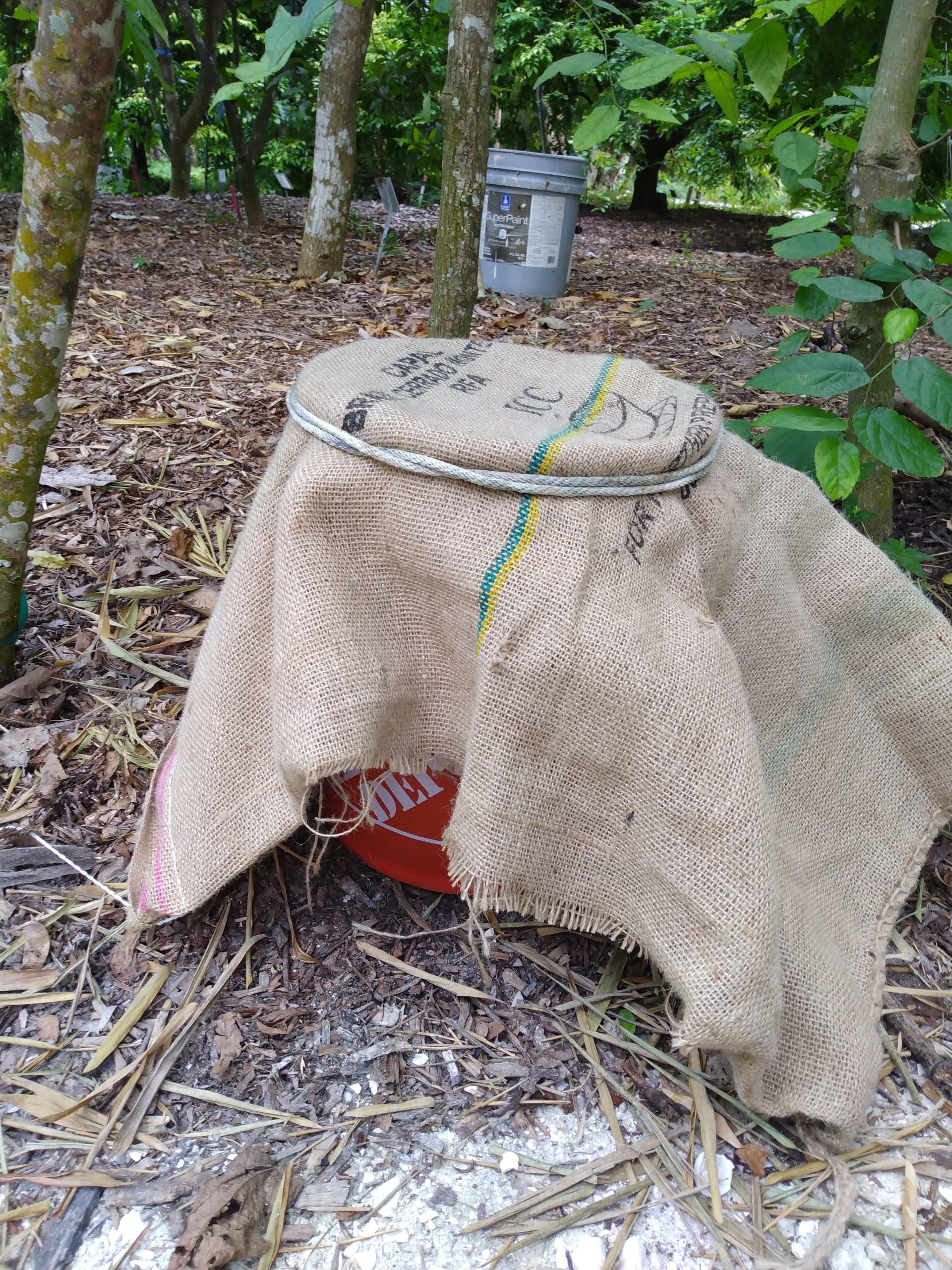
Finally, cover your concoction with a towel or cloth and tie it on tight to keep creatures out. Put it in a sheltered place, in the shade, in a shed, or a barn and let it ferment for 2-4 weeks.
It depends on your climate how long it will take to ferment, if you live in a very hot and tropical environment, maybe try only 2 weeks. In Southwest Florida, we’ve had good success with 4 weeks. After allowing it to sit, strain out the remaining fish parts (mostly only scale and bone will be left). You can bury these in your garden to keep the nutrients around. The liquid part is our shelf stable fertilizer which can last from 6 months to a year on the shelf. Dilute it with water and apply to your plants. Typical dilution rates range, but 1:100 or 1:200 is typical depending on the size and nutrient needs of the fertilized crop.
The estimated Nitrogen value of a fertilizer like this is typically between 3-5% and it also contains phosphorus and potassium as well as minor elements. However, the true beauty of biofertilizers like this one is in the microbial content and the presence of amino acids (protein). Like humans, plants also need protein! Also like humans they use microorganisms to break down nutrients so they can digest them. Using fermented fish fertilizer will help to inoculate your soil with a more diverse microbe population, leading to stronger, healthier plants!
What are other versions of this fertilizer that you’ve made? What tips and tricks have you found in making fish fertilizer easier or more effective?
More resources:
Culturing beneficial microbiology for farming | ECHOcommunity.org
Homemade microbial products for plant and soil health: FFA and IMO | ECHOcommunity.org