What do you really look for in a cucumber hashtag#cucumis?
Crispness? Water content? Or is it the uniform green skin from the supermarket shelf?
Last week in Bahi, Dodoma, my perspective shifted.
Beyond the familiar hashtag#Cucumissativus I met two local varieties that reminded me a story about resilience, culture, and nutrition.
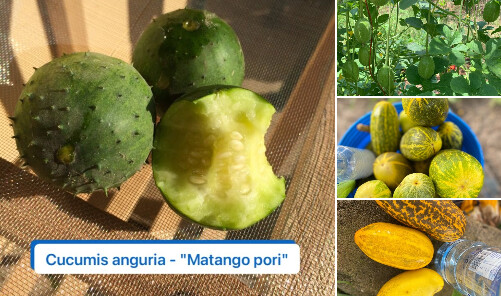
The yellow “Indian cucumbers” hashtag#Cucumismelo sold at just 200 TZS each. The vendor handed me salt and said, “Try it like this.” They were Sweet, Sour and Hydrating!
When I asked women in the community about this cucumber, they smiled and said: “Ahh, that is magogo.”
Among the Gogo of Dodoma, and people in Singida, and Tabora, these were not just the fruit that feeds families, the leaves are lightly boiled and sautéed with groundnuts for a nourishing relish.
From an inquiry at our hashtag#ECHOEASeedbank for such seeds. I asked them about the hashtag#Cucumisanguria known in Swahili as “matango pori”. They’re Small, rounded, slightly hairy fruits. Wild. Untamed.
They said “They’ve plenty in the wild. We select the tastier ones while still green,” they said. The leaves too become “mlenda matango” cooked as pumpkin leaves.
Cultivated during rainy season, , become survival crops households when food is scarce in dry period
These are not “inferior” cucumbers.
They are climate-adapted, multi-use survival crops.
I’m looking forward to collecting the seeds in April and May. 
What other hashtag#cucumis varieties grow in your areas?
hashtag#NUS hashtag#Agrobiodiversity hashtag#SeedSaving hashtag#RegenerativeFoodSystems hashtag#Dodoma hashtag#Cucumis hashtag#FoodCulture hashtag#myfoodisAfrican hashtag#echofightshunger
hashtag#indigenousvegetables