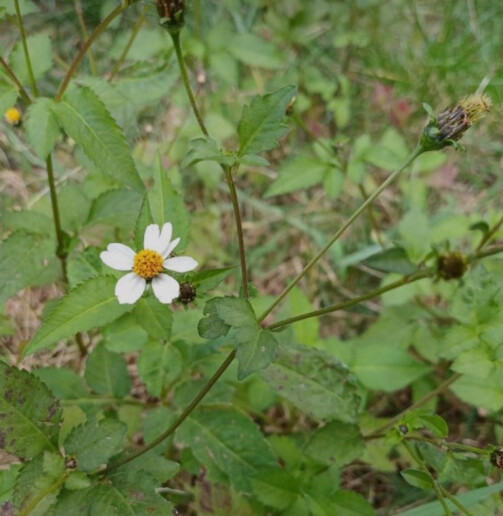
You probably remember this:
walking through a farm during the rainy season, some tiny sticky black needles cling to your clothes, socks, and even shoelaces. Very stubborn! removing them one by one can feel like a small battle just to stay comfortable. hashtag#bidenpilosa hashtag#mashonanguo hashtag#blackjack
What if I tell you these plants  not only catch our clothes….. should be capturing attention too
hashtag#bidenpilosa known in English as hashtag#Blackjack and in Swahili as “Mashona nguo”, meaning “the one that knits clothes.” The name couldn’t be more fitting
Happens to be one of the nutritious traditional vegetable rich in protein and fats. However, now most people think of it as weed. It grows quietly everywhere from the field to the roadsides.
Among the Meru and some other communities in northern Tanzania, this humble plant is still appreciated as a vegetable. It is cooked on its own or mixed with other traditional greens, sometimes even blended with bitter vegetables to balance flavor. Some even use the leaves as tea leaves a very good pesticide too!
During seedsaving trainings I facilitate, I often tell farmers:
“Those sticky needles catching your clothes? Collect them those are the seeds we conserve at the hashtag#ECHOEastAfricaseedbank.” People usually laugh first.
But the conversation shifts after. Many realize that this plant is no longer growing as abundantly as it once did. That’s when the importance of collecting and conserving the seeds becomes clear.
 The hashtag#bidenpilosa is still waiting for the appreciation it deserves not just as a weed, but as food, culture, and biodiversity.
Any other hashtag#NUCs ?? Let’s keep rediscover them together
hashtag#NUS hashtag#myfoodisafrican hashtag#foodsovereignity hashtag#seedsaving hashtag#agroecology hashtag#echofightshunger hashtag#africantraditionalvegetables hashtag#blackjack hashtag#NUCS