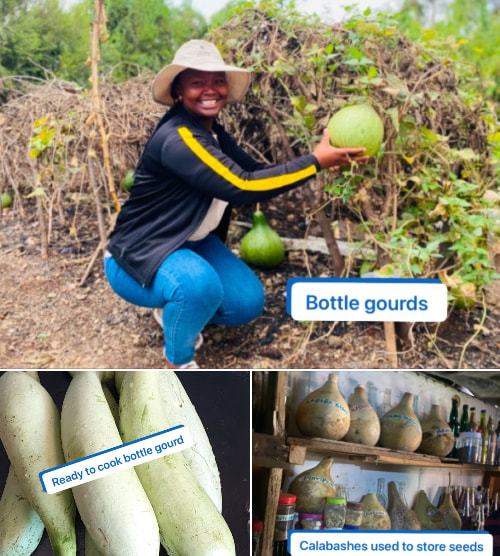
For the longest time, I thought hashtag#lagenariasiceraria hashtag#mamumunya hashtag#vibuyu hashtag#bottlegourd were crafted by artisans ….
….
At hashtag#ECHOEastAfrica seedbank I’ve met young people who like me before asked .. “wait.. this comes from seeds?” - A reminder of how much knowledge we are at risk of losing if we don’t intentionally conserve and share it.
A fast-growing vine quietly climbs fences and hut walls across rural homesteads. It thrives even in arid and semi-arid regions. It comes in different shapes, long, round, bottle shaped, snake-like.
This plant is no ordinary Young fruits are harvested when tender and cooked like pumpkin or added to vegetable dishes. Once dried, the gourds are made into bowls, spoons, cups, and storage containers for milk and water. Also used to make musical instruments for cultural purposes.
The calabashes are also used for seed storage in the CSBs.
How to prepare and cook the white-colored calabash gourd and leaves:
- Chop pumpkin/ the young gourd into cubes then boil it to soften with salt.
- Wash calabash leaves and blanch in hot water for 3minutes to retain it’s green color
- Drain the leaves and blend them to have a smooth puree/ (optional) / you can cut the leaves into fine small pieces and sautee it with onions, tomatoes then continue with step 4
- Transfer the blended leaves in pot and heat then add the cubed pumpkin/gourd that you boiled then add spices of your flavor and hot pepper if you like.
- Cook it for a while while adding water to your liking if you prefer light/heavy.
- You can add boiled meat/ fish at the end and stew and add coconut/ groundnut paste let it boil a bit and it’s ready.
How’s hashtag#calabash /hashtag#bottlegourds used in your community today?
hashtag#NUCs hashtag#traditionalvegetables hashtag#echofightshunger hashtag#myfoodisAfrican hashtag#seedsaving hashtag#foodsecurity
hashtag#agroecology