Research Trial Update: Salt and Vinegar Based Natural Herbicides for Weed Control
By Krit Suriyachaipun, Wipho Toecher, Saeng Seiamrai, and Shaun Snoxell
ECHO’s Asia Impact Center aims to operate our farm using low input and organic approaches wherever possible. Weed control using these organic approaches can require more labor and planning.
ECHO Asia farm staff developed a low-cost weed control formula using salt and vinegar, as an organic herbicide option. These ingredients are inexpensive and widely available in rural communities across Thailand. ECHO Asia staff wanted to evaluate their own recipe, so a simple trial was conducted. This trial tested three formulations to evaluate their cost-effectiveness, weed control efficacy, and impact on soil health.
Approach
Three herbicide formulations were tested, each combining salt, vinegar, and water in different concentrations. Table 1 below shows the quantities of salt and vinegar added to 20 liters of water, for each formulation. The table presents the per liter cost of each formulation.
Table 1: Natural Herbicide Formulation Recipe and Cost
| Formula | Salt (per 20 liters water) | Vinegar (per 20 liters water) | Cost (THB/liter) | Cost ($USD/liter) |
| Low concentration | 2.5 kg | 0.5 liter | 1.4 | 0.04 |
| Medium concentration | 5 kg | 1 liter | 2.9 | 0.09 |
| High concentration | 7.5 kg | 1.5 liters | 4.4 | 0.14 |
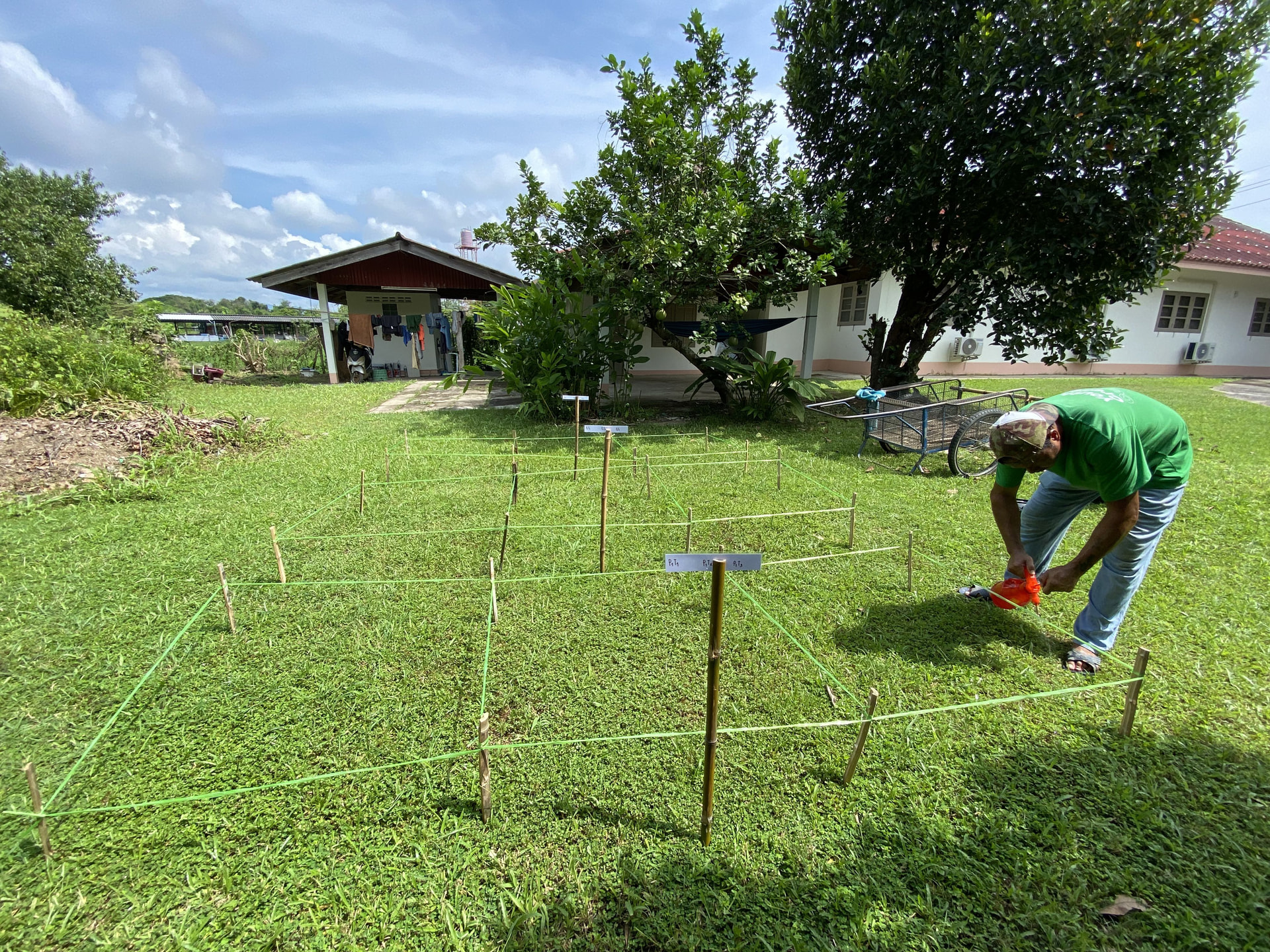
The natural herbicide was applied at a rate of 1 liter per square meter across nine 1×1 m plots, with each formulation applied to three plots. The plots consisted of weedy lawn species. A single application was made, and plots were monitored daily for 10 days. Soil samples were collected before and after the experiment and sent to a university laboratory for analysis of pH, electrical conductivity (EC), and extractable sodium (Na).
Results
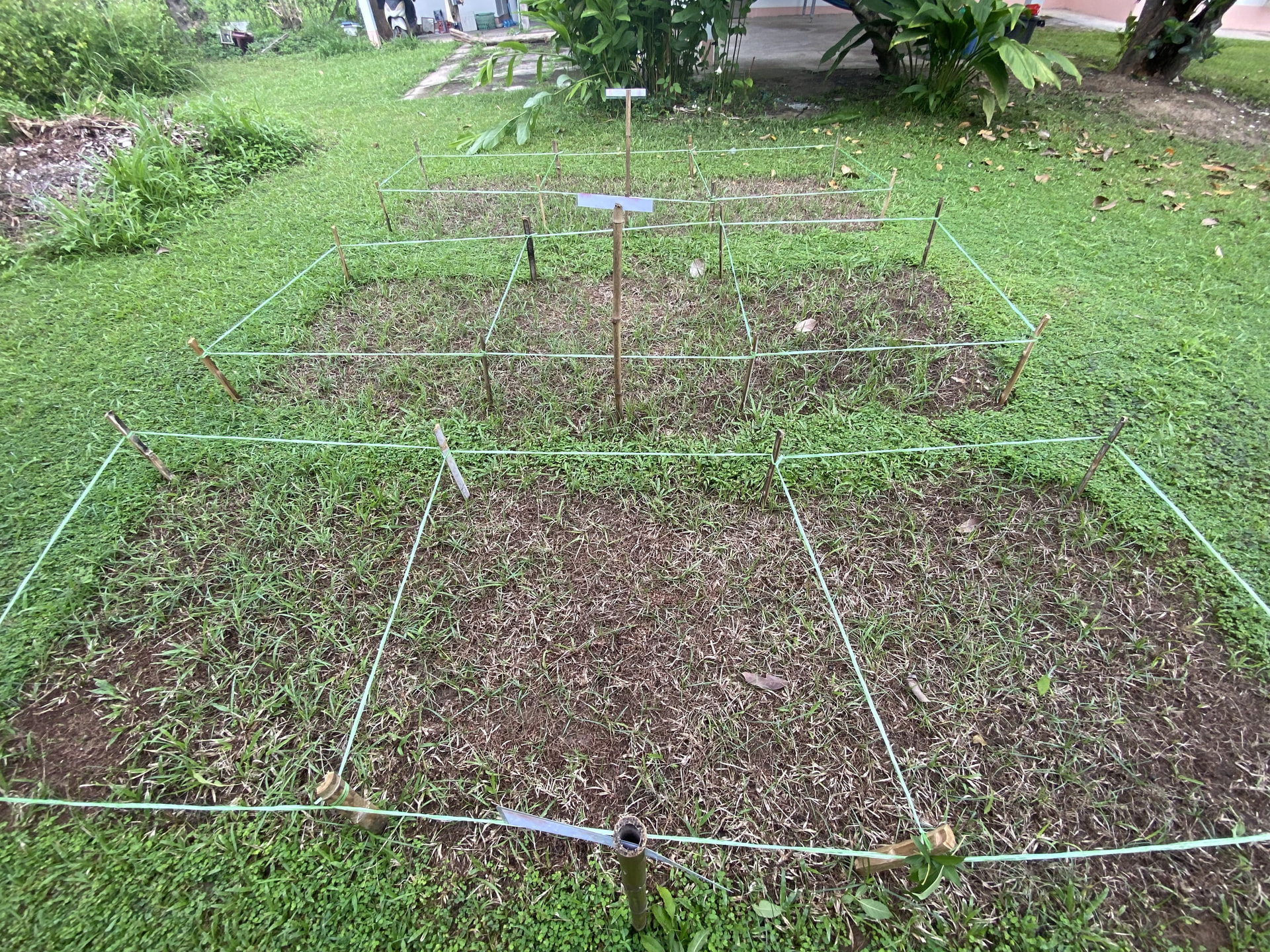
The medium and high concentrations of natural herbicide achieved 100% control of Desmodium triflorum and Axonopus compressus weeds within 10 days. For Imperata cylindrica and Cyperus rotundus, the medium and high concentrations caused leaf desiccation, and partial dieback. However these plants began recovering after 7 days from application. The low concentration was less effective, with all weed species still surviving ten days after application.
We found that a single application of the higher concentration recipes can cause permanent death of more vulnerable species. However even the highest concentration was not effective against deep rooted or hardy weeds.
After spraying, soil pH and EC remained in normal ranges for all three formulas, posing no immediate risk to plant growth. However, extractable sodium levels rose from a baseline of 25 ppm to 142–220 ppm, depending on the formula. These levels fall in the moderate range (100–300 ppm), where there may be a negative impact on sodium-sensitive crops. Repeat applications are likely to cause sodium levels in the soil to accumulate to levels that will harm most crop species.
Conclusion
The salt and vinegar based natural herbicide recipe trialed was partially effective at weed control. At high concentration levels, most weed species had temporary leaf desiccation. Some shallow rooted species died at the medium and high concentrations. For lawn weed control, the herbicide was not very effective due to rapid reestablishment of surviving deep-rooted weeds.
The potential for sodium accumulation in the soil was another concern. Sodium will be partially washed out of the soil by rainfall and irrigation, however frequent repeat applications are likely to rapidly build up soil sodium levels. The natural herbicide recipe should only be used in areas where crops will not be cultivated.
The research team concluded that these recipes had limited potential applications. The main use case would be for use on susceptible species in areas where production crops would not be crown. For example, spraying weedy paths. Alternative organic weed control options like hand weeding, mulching, and tilling would be required in most cases.