Syntropic agroforestry is a system that uses the principles of stratification (layers of the forest) and succession (stages of forest growth), to create a low input, resilient perennial system. To find out more, download this manual written by Roger Gietzen…
…or come to our week long training with Roger this April!
I wanted to highlight the Syntropic Agroforestry maintenance that I do about 4-5 times a year- it is the primary form of labor and ‘input’ in the system. I want to thank Roger Gietzen for guidance in the installation and planning of our system. Our demonstration is a few years old (under 3), with various stages of growth represented.
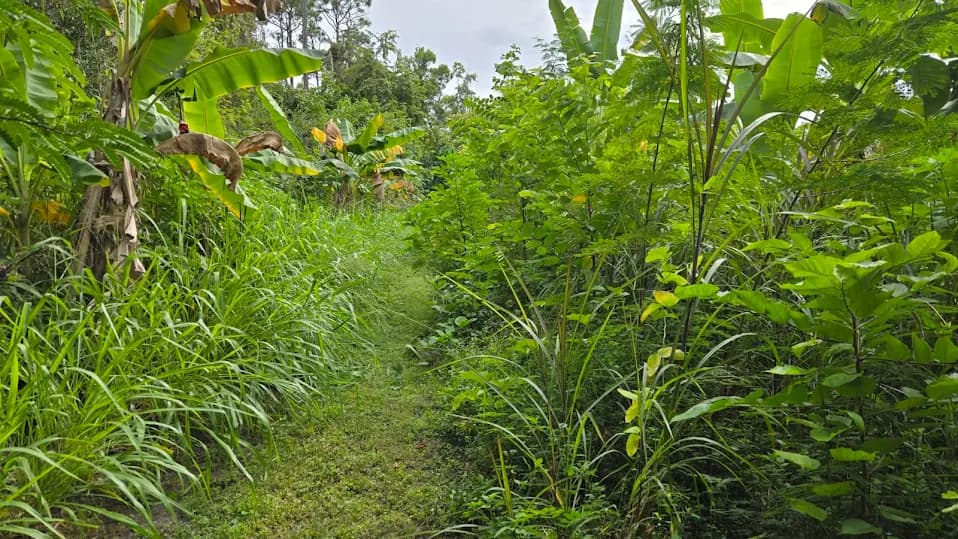
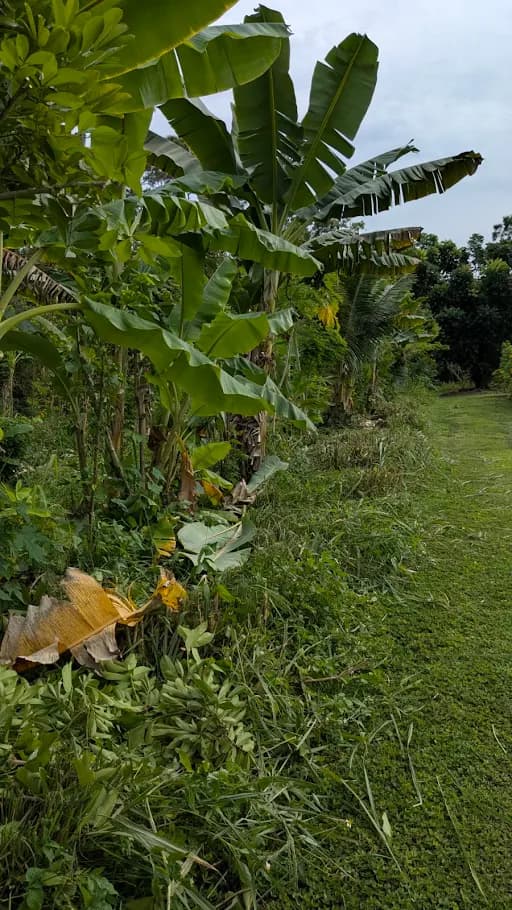
Before: There is a lot of biomass from about 6-8 weeks of growth.
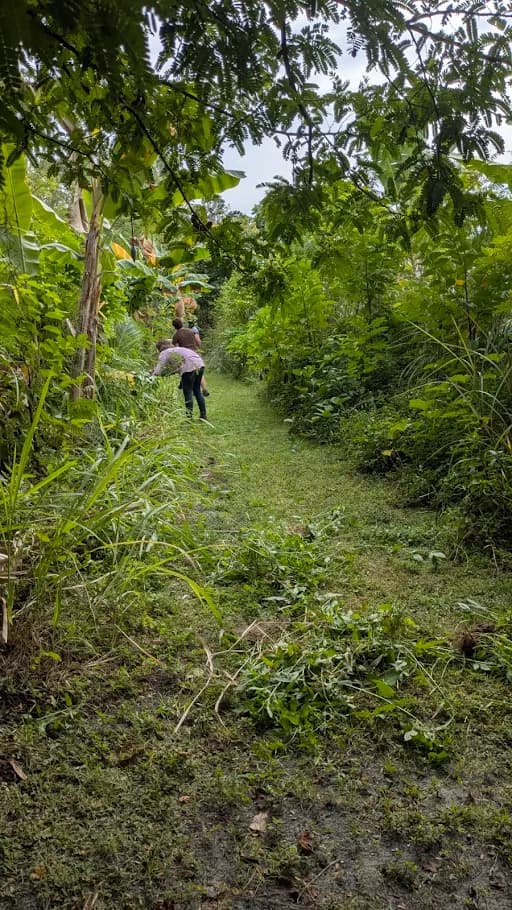
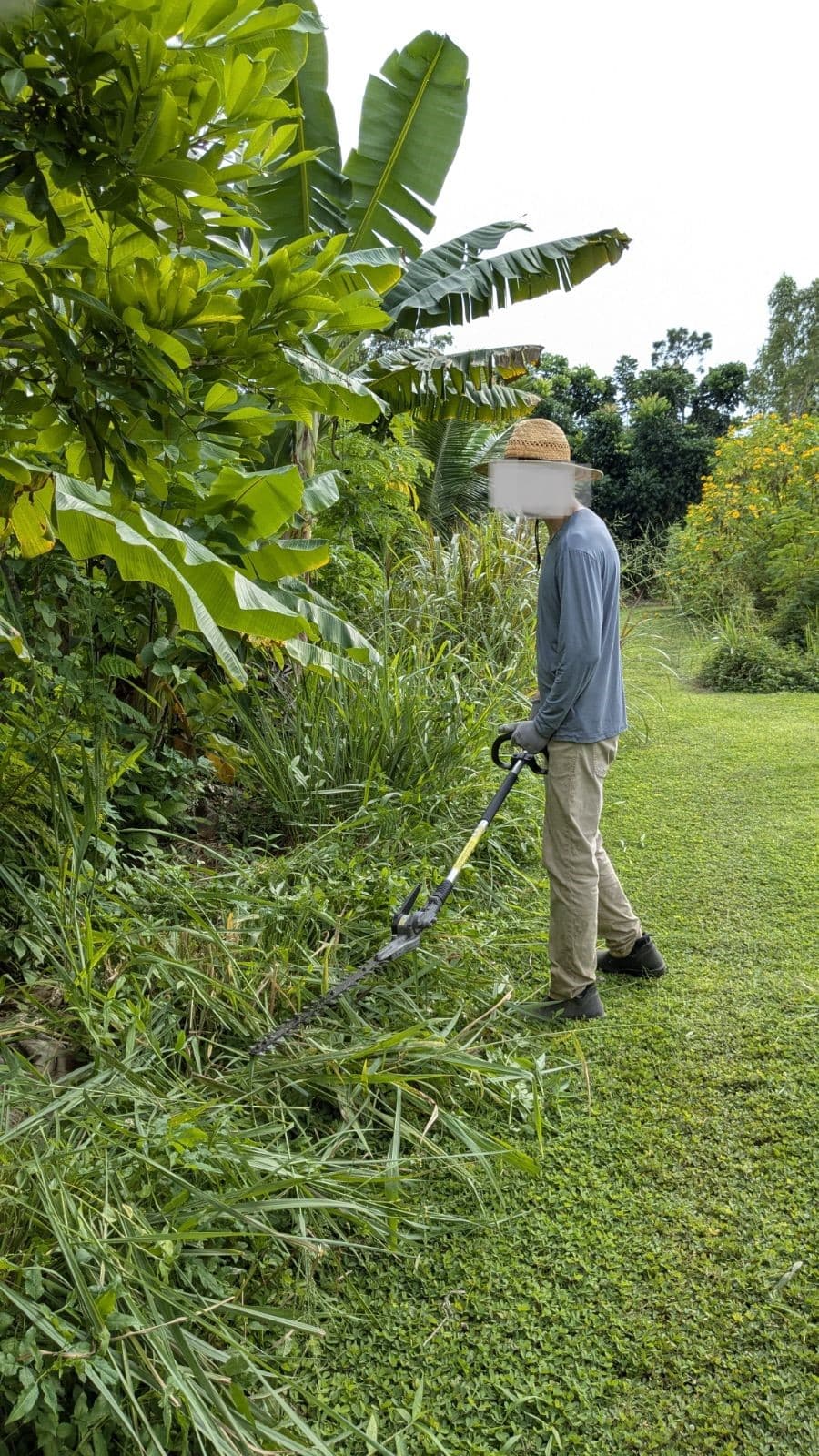
Maintenance: The side rows of biomass plants are chopped/dropped with a machete into the system to build the soil and feed the ‘target’ perennials that we want to grow for production. Our ‘biomass’ trees are also delimbed with a saw/pruners and the material is chopped and incorporated into the system.
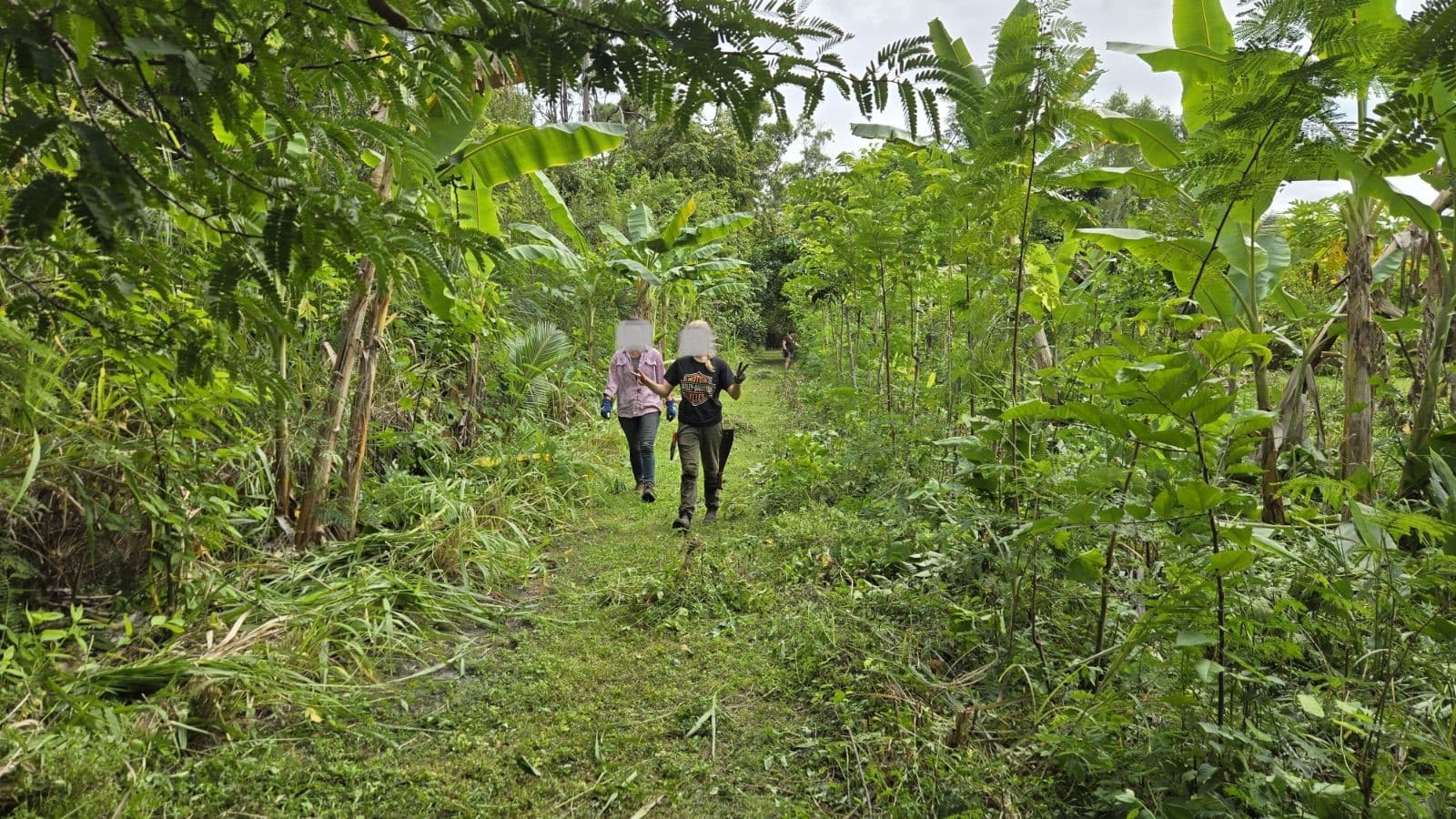
After: Here is the final product! We will begin this process again during rainy season and continue about every 6-8 weeks, depending on growth. This pruning allows the system to have a pulse of energetic growth, speeding its maturity.
This is one of the few agroforestry systems that can feasibly be mechanized!
After: Another final view.
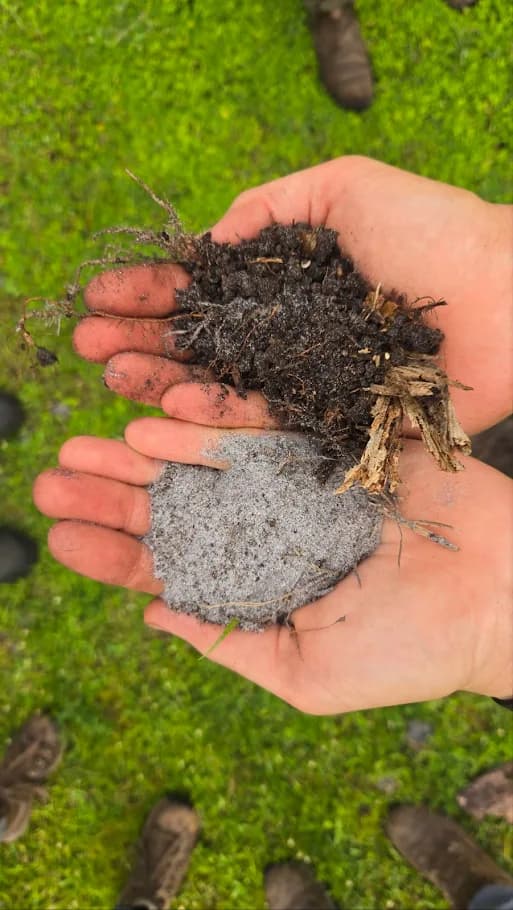
A photo of our native soil and our syntropic soil- after a few years of compost, degrading mulch material, and chopped vegetation on our system, the soil is very rich.
Feel free to share your stories and photos of your own syntropic systems!
2 Likes
Fascinating. What plants are you using in your system for biomass and production? What are the differences between syntropic systems and a system like alleycropping?
Good question!
In this system we are using…
Production: banana, papaya, akee(more as a collection piece), citrus, coconut, mango, jackfruit
Biomass: Mombassa grass, vetiver grass, elephant grass, mexican sunflower, guazuma, corymbia torelliana, banana
Off of the top of my head, I would say the main differences mostly involve the complexity and principles that are used. Syntropic uses species of multiple strata (vertical plant spacing) and multiple stages of succession (pioneer species-climax species) grown in the same system. The biomass is also typically grown in row with the target species. Generally, alley cropping focuses on 1-2 species of plants as a target and 1 for biomass. Syntropic tends to focus on perennials long term- alley cropping tends to be adapted more for annuals, but perennial systems are possible.
Anyone else want to chime in?
I would say the biggest difference is time. Alley cropping is almost always a set system: a particular tree crop in rows, with annuals (typically, or maybe small perennials) in between. That system pretty much doesn’t change from start to finish. With Syntropic, you have a constantly changing system. Your first several years, you have an annual-dominated system. As your perennials begin to establish, you start transitioning from an annual-based system to a short-lived perennial-based system, to long-term perennials…and then you can start again with annuals. Think of it like a forest. You designed it, you planted it, and you harvest from it as it grows.
@Quinn_Beitzel looks great!